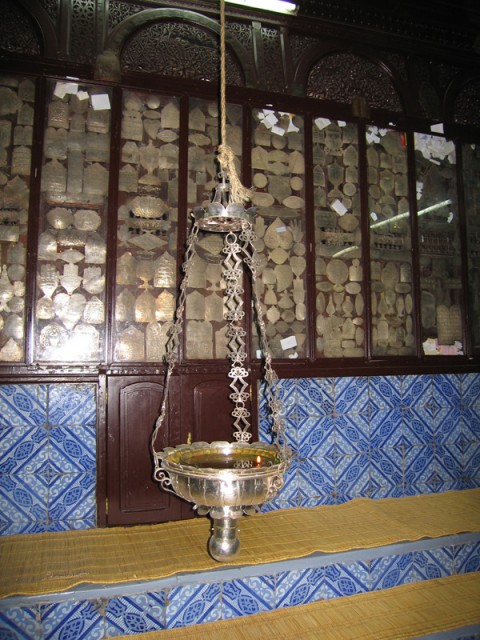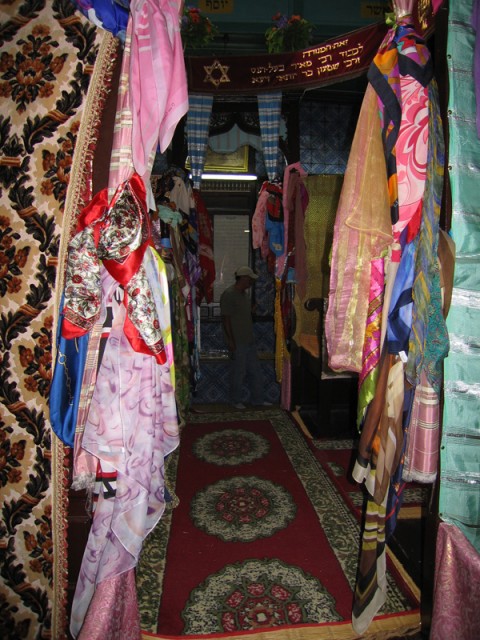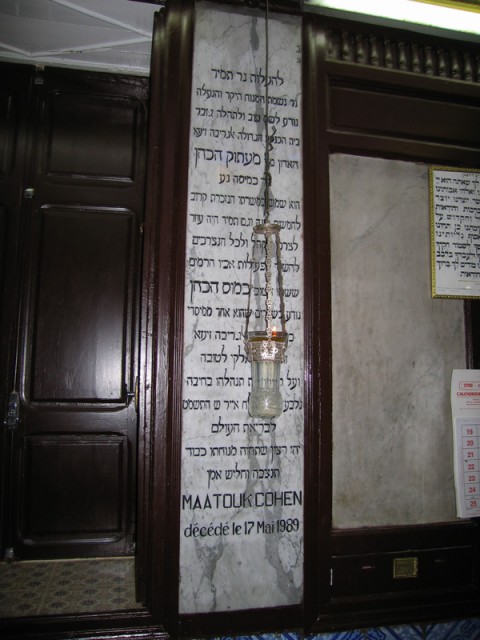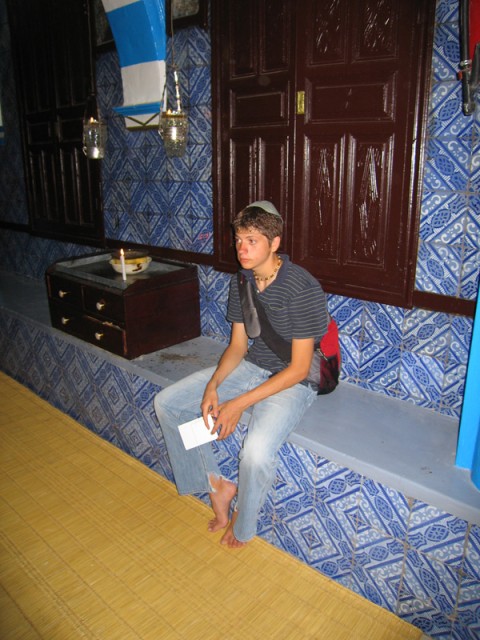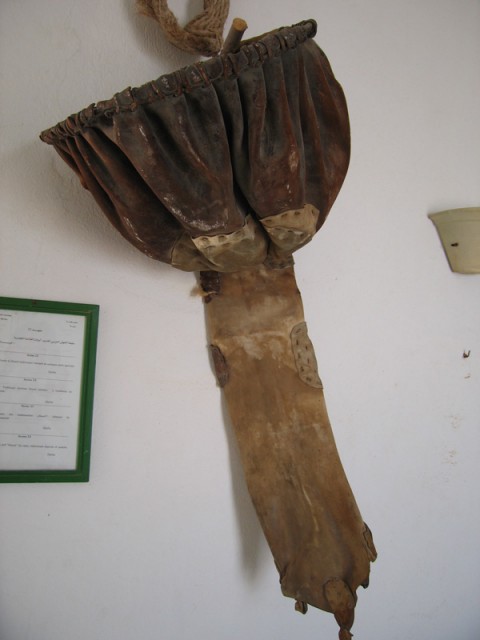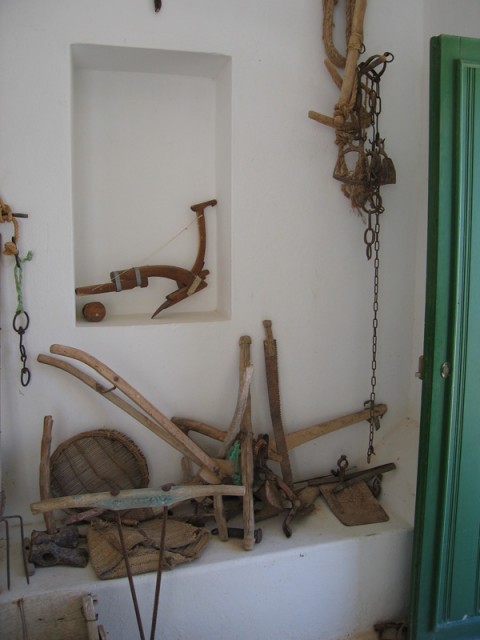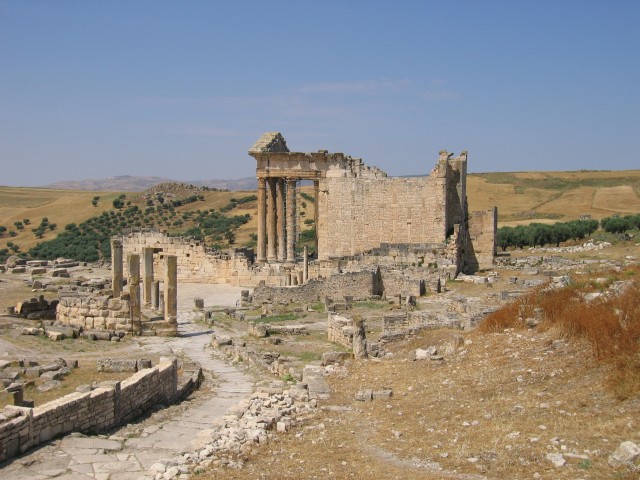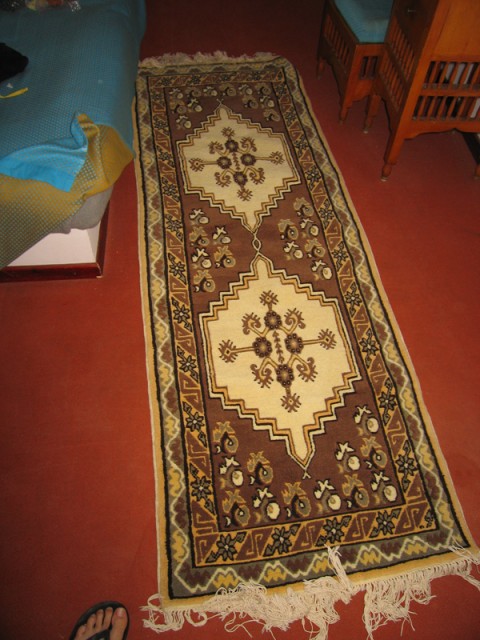
The rug I bought my mom in Kairouan.
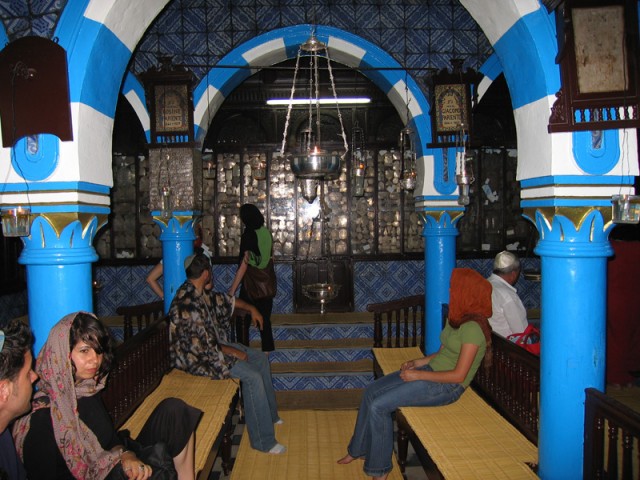
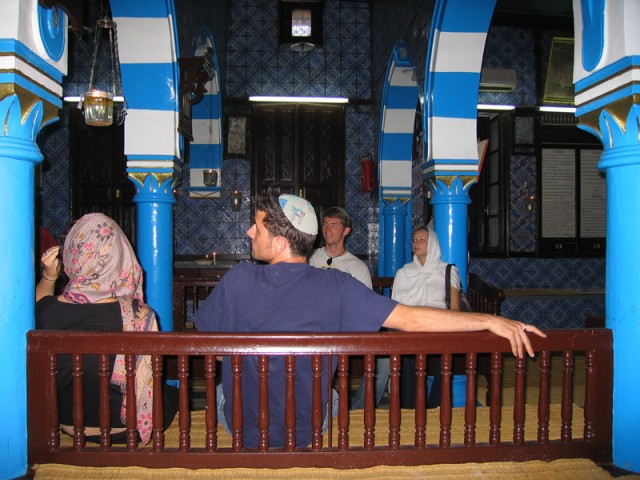
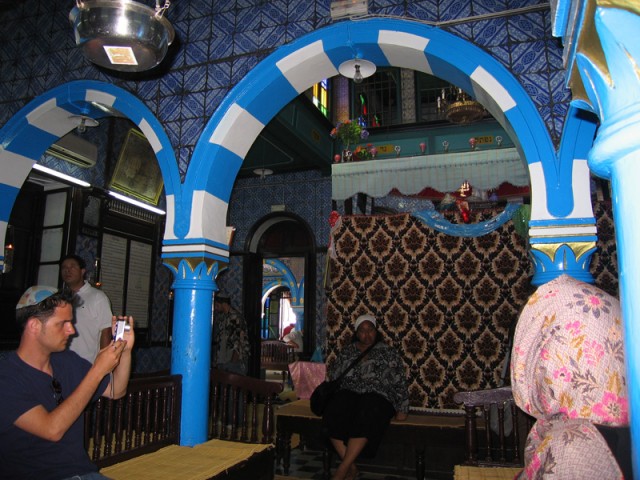
In the El-Ghriba Synagogue
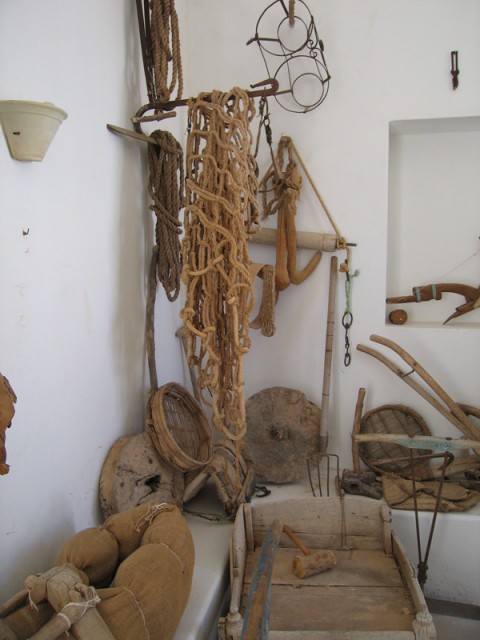
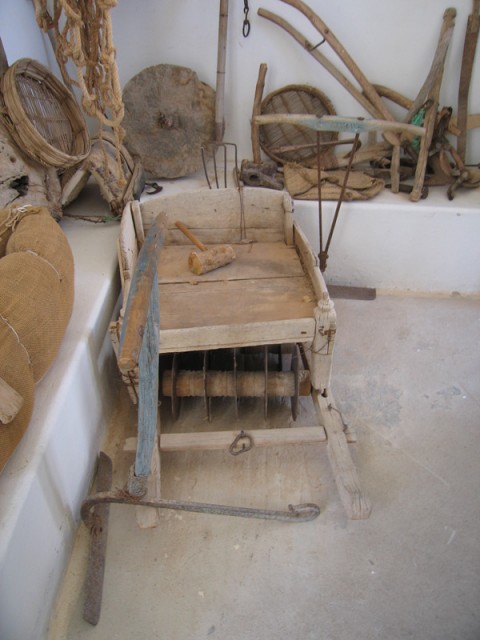
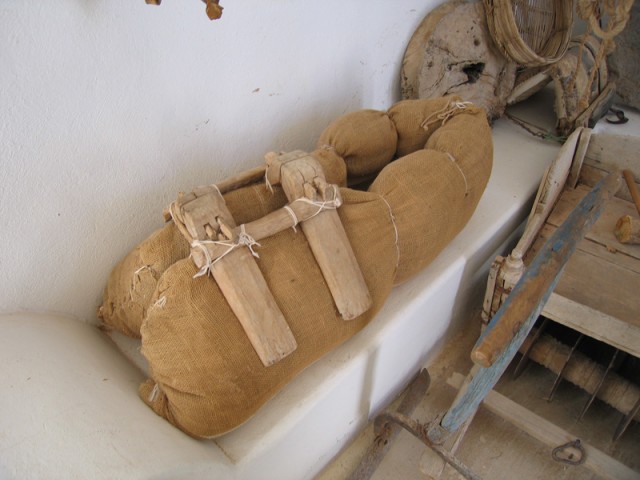
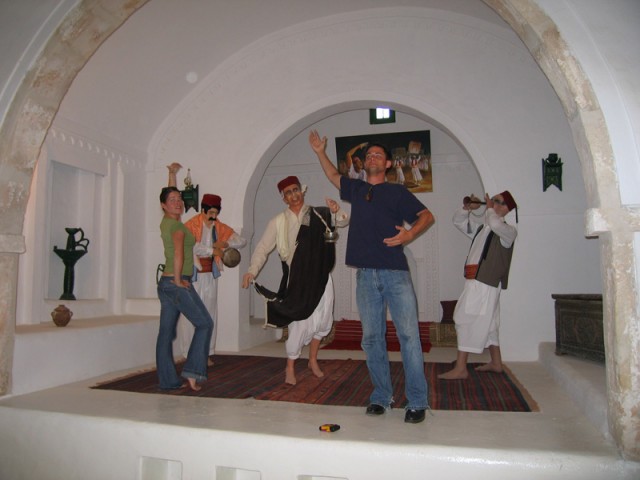
At the Folk Museum
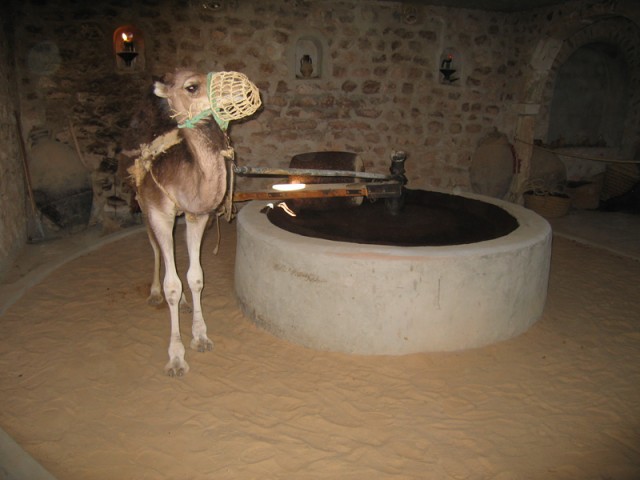
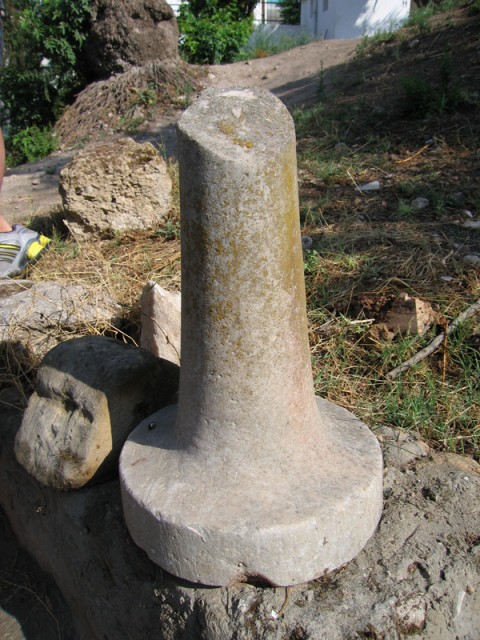
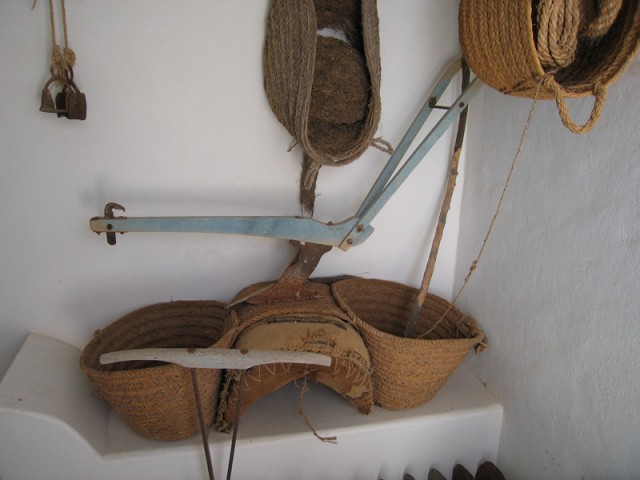
An underground olive oil press. Note the partial Roman column providing pressing power. To my knowledge there is no granite in Tunisia or anywhere nearby.

The personal and professional website of Douglas Van Bossuyt
You are currently browsing articles tagged Roman Ruins.
The rug I bought my mom in Kairouan.
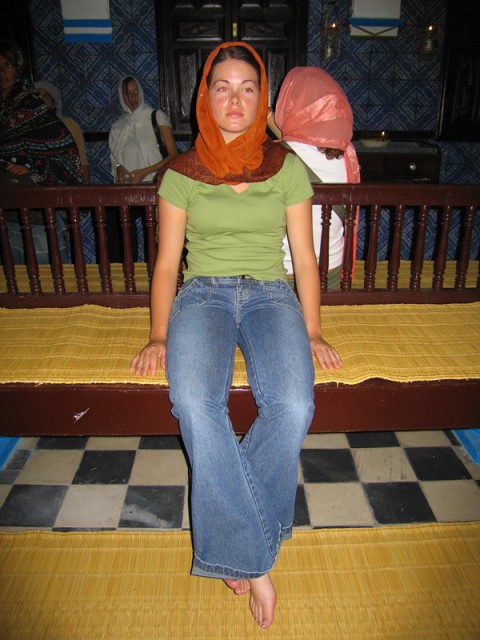
In the El-Ghriba Synagogue
At the Folk Museum
An underground olive oil press. Note the partial Roman column providing pressing power. To my knowledge there is no granite in Tunisia or anywhere nearby.
Tags: Djerba, El-Ghriba Synagogue, Folk Museum, Isle of Djerba, Roman Ruins, TPP, Tunisia
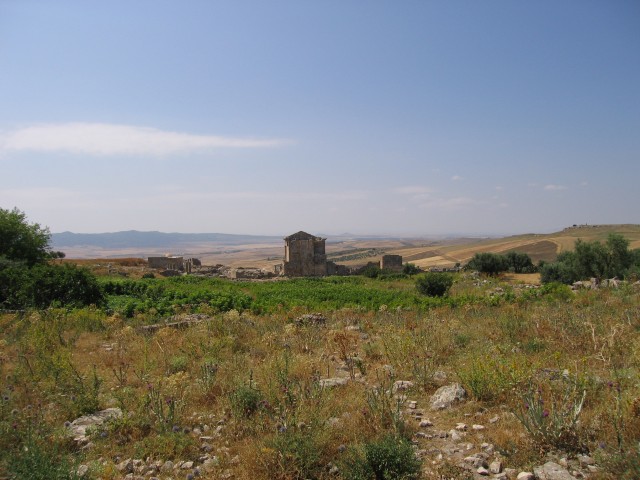
Notice the access hatch to the underground aqueduct to the right of center.
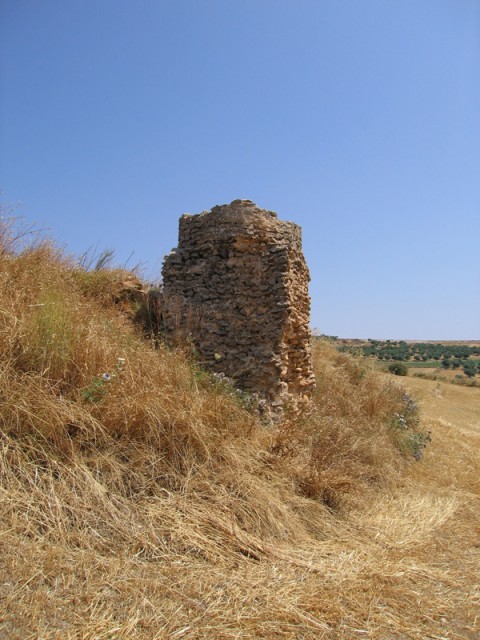
A closeup of the access port.
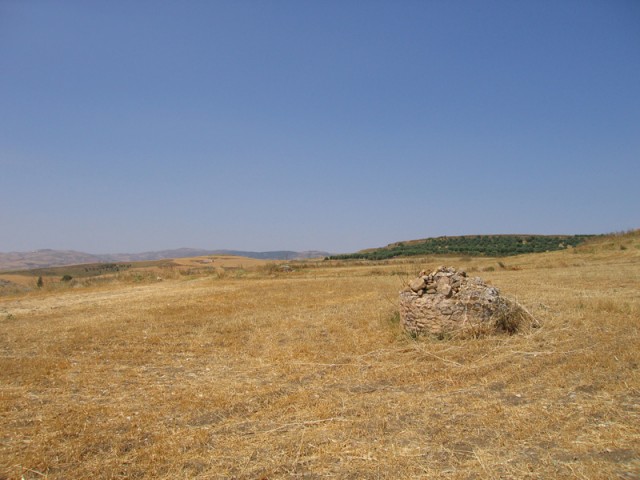
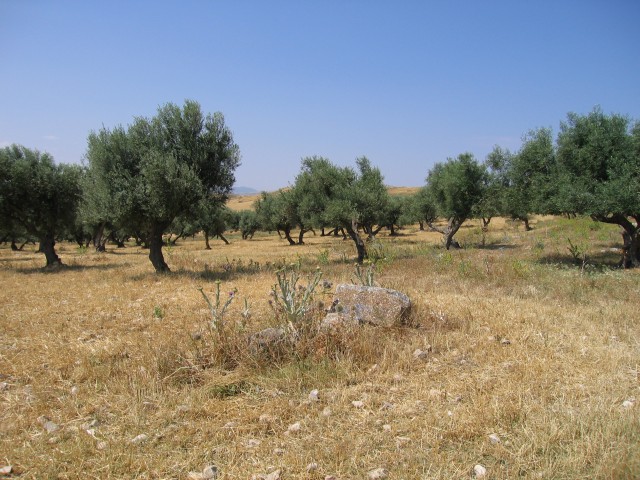
Another access port in a field.
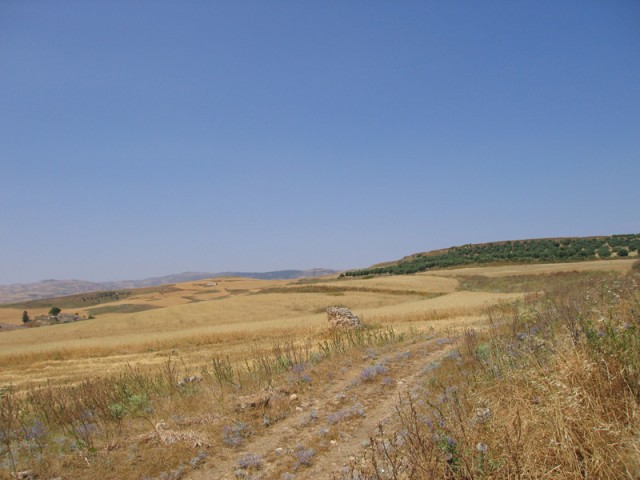
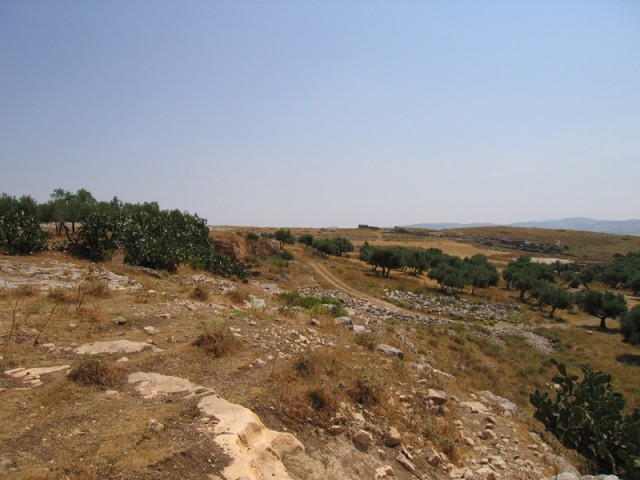
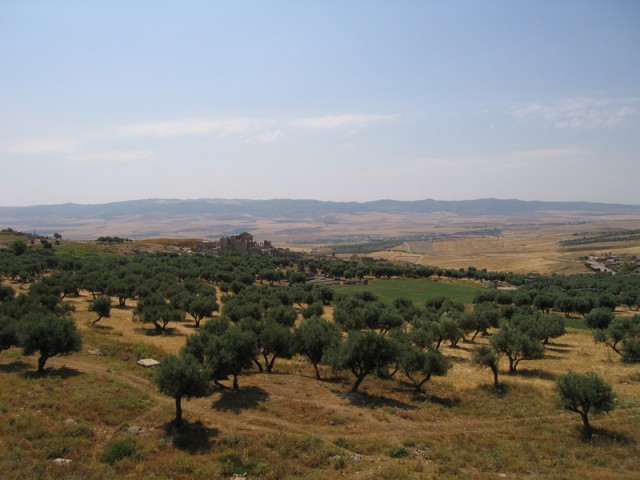
They stretch off out of sight at regular intervals.
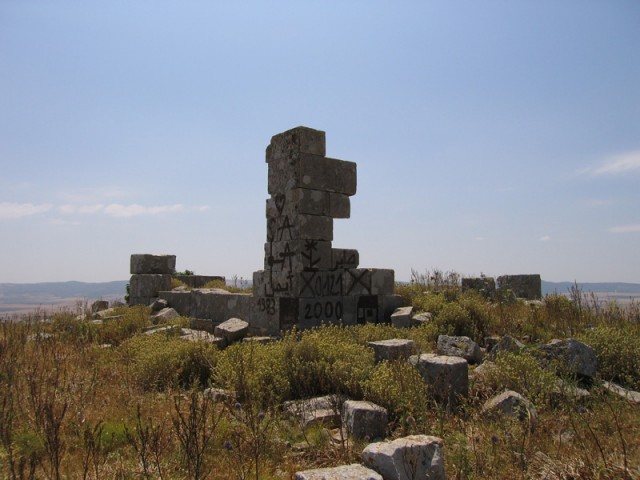
Tags: Aqueduct, Dougga, Roman Ruins, TPP, Tunisia
The harbor at Carthage.
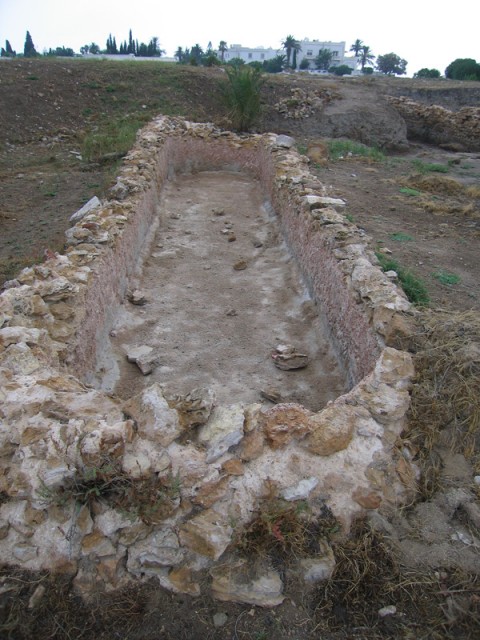
A boat bathtub?
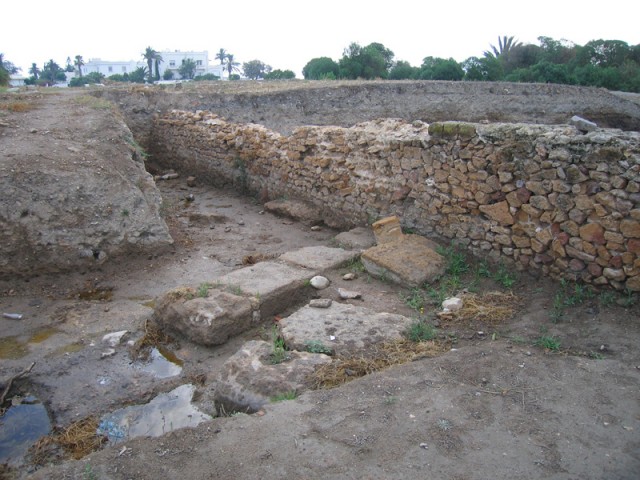
Recent diggings.
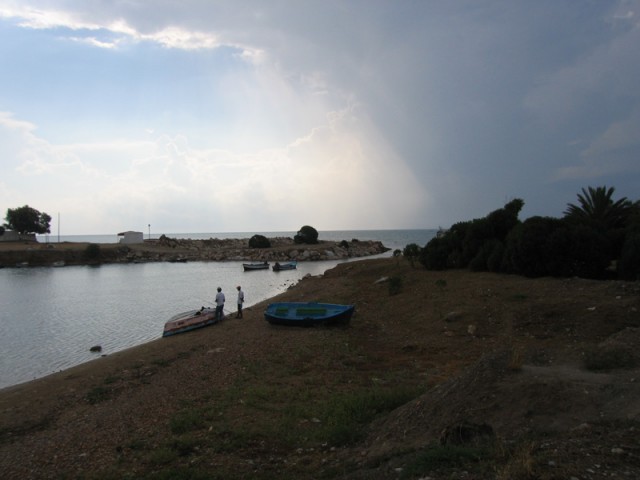
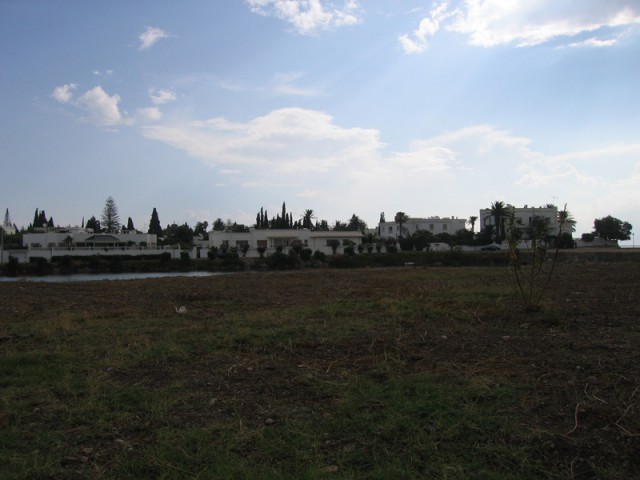
The houses of the president’s daughters.
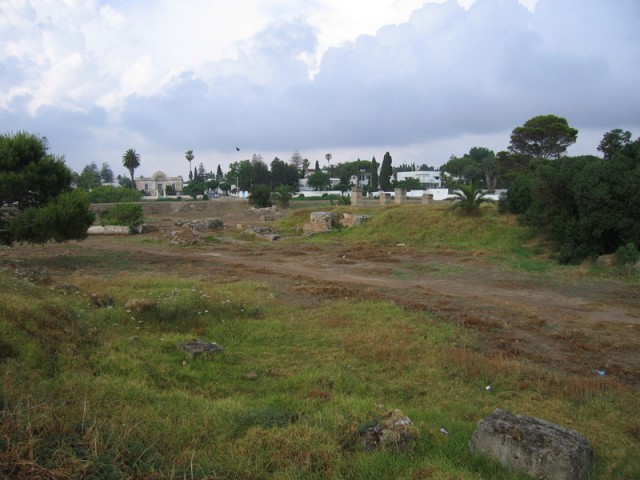
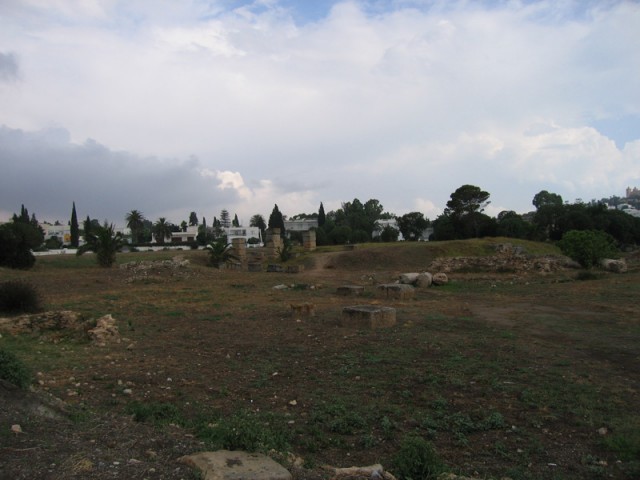
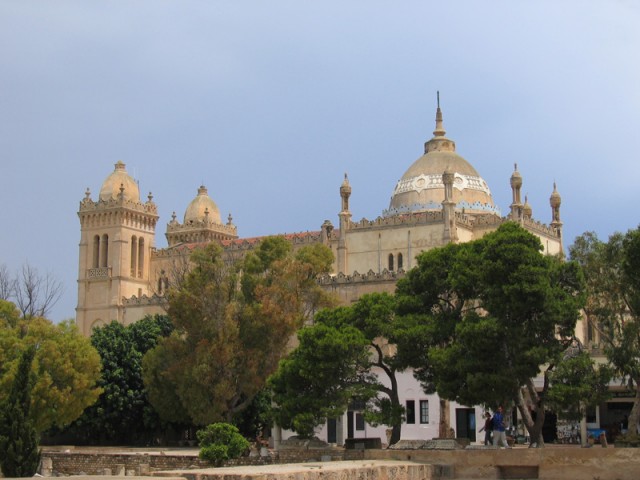
The Basillica on Byrsa Hill.
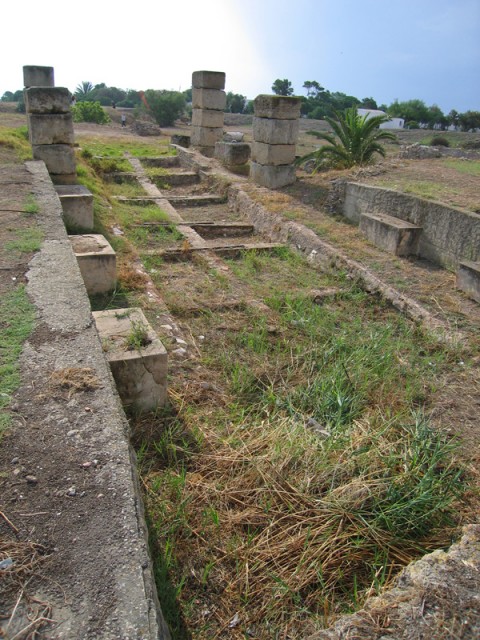
A boat launch.
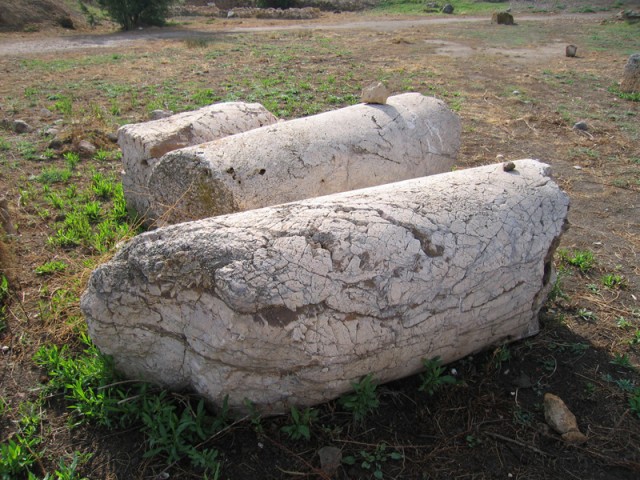
Trophet, site of Carthiginian sacrifices. Some say children were sacrificed to the fires here. Others say it was just animals.
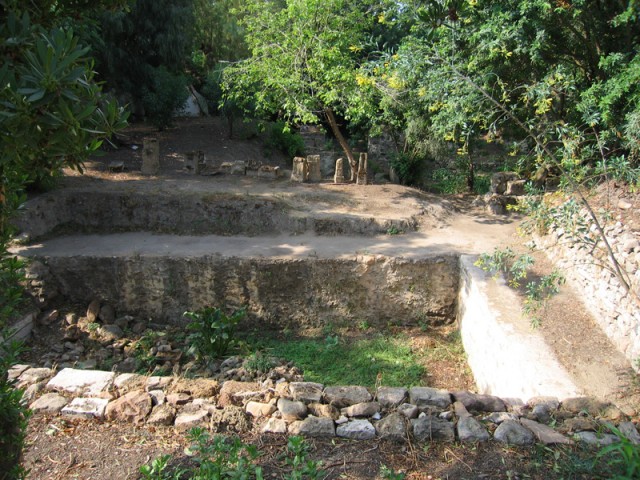
Carthiginian cannon munitions?
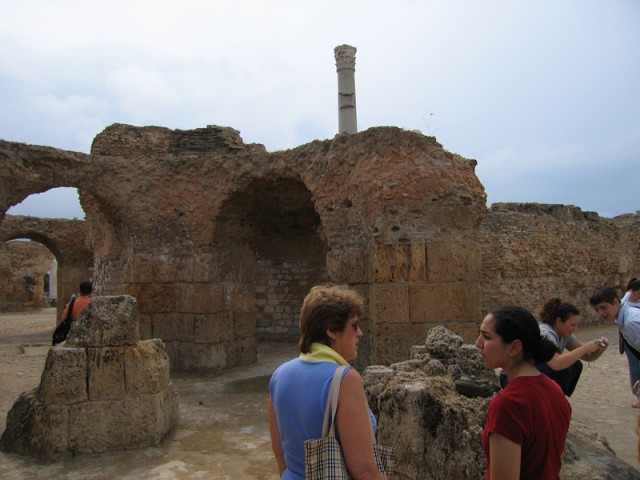
At the baths.
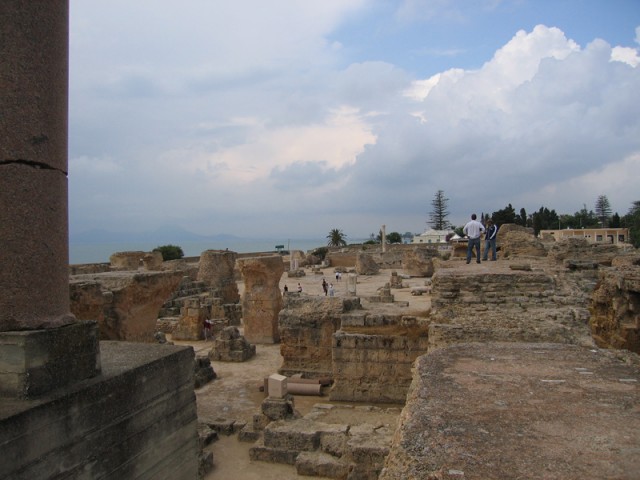
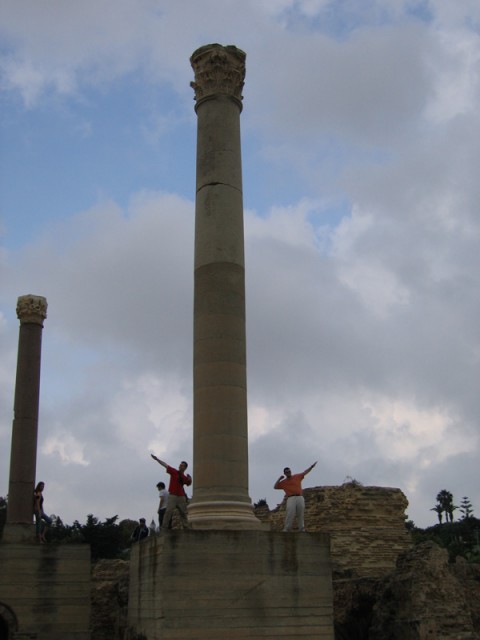
Mr Universe pose.
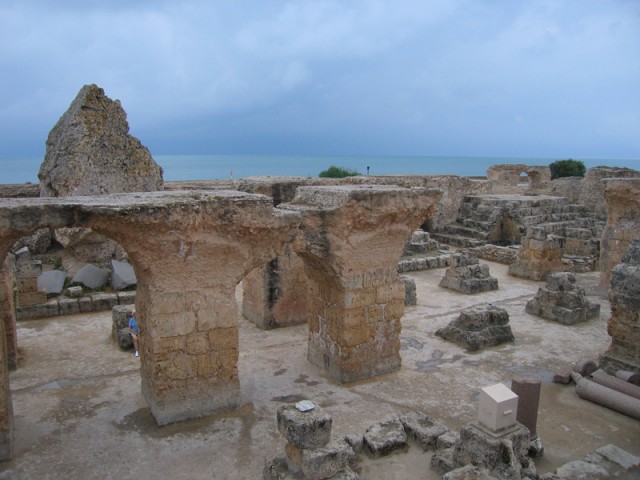
The Basilica on Byrsa Hill.
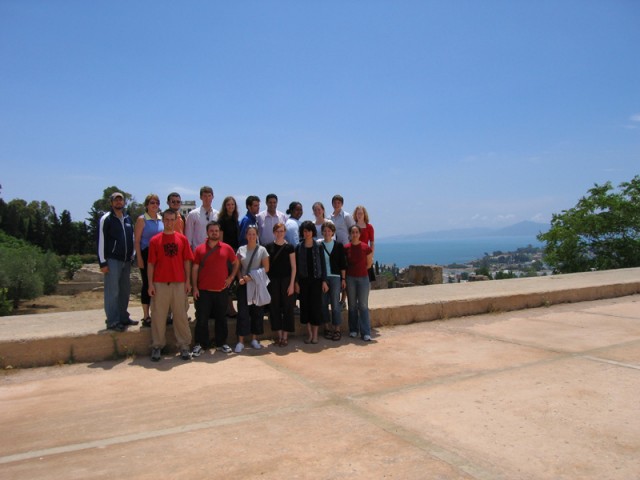
The whole group.
Tags: Antonine Baths, Basilica, Bysra Hill, Carthage, Carthage Ruins, Dr. Miller, Roman Ruins, TPP, Tunisia
One fine Saturday I woke up at 4am and walked down the hill my house was perched on about 2 kilometers to the long-distance shared taxi station for the north and west of the country. I met my friend Francesca there. She’s from Oxford and speaks with a proper Oxford BBC accent. She majored in French Literature and is wrapping up a year worth of teaching English in Tunisia. As always, she was outfitted with a pink shirt and some Capri pants — this particular day in a military theme.
We found a shared taxi (louage) heading for Le Kef and hopped in. About three hours later we arrived in Le Kef (“the rock” in Arabic) about 40 kilometers from the Algerian border. We then found another louage heading for Tajarouine about 70 km farther south along the border. In this town we saw some really cool storks’ nests on top of the main mosque’s minaret. I took a couple of photos. Francesca got some coffee while I secured seats in the next louage. We had to wait for a while before the van filled up. The farther out into the countryside you get the longer you have to wait for transport. Our next destination was Khallat en Seina about 10 km from the Algerian border
Our first view of our final destination from Tajarouine.
In Khallat en Seina we walked up to the National Guard office to register our passports. This close to the border and in this small of a town such things are required – especially for what we were there to do. The first guy we talked to in the office spoke very good French. Francesca communicated with him. He took us to another office down the street where we waited about 10 minutes for his superior to come. This guy spoke almost no French but a lot of English. Very strange! He asked us if we had come with a tourist company. We told him no. He said to wait for a minute. He called up a friend of his who lives in a village about 10 km away who happened to be in town with his little put-put pickup truck. It was about a 1960 Renault pickup. Francesca, I, and the driver all piled in and we were off to his village. It was decided by the National Guard we’d pay 5 dinars for his services. At the village he found the site guardian for the site of our objective. This guy spoke no French and only a very heavily dialected Arabic that was more close to Algerian Arabic than Tunisian.
We came to this little village (Ain Senna, the well of senna) in the middle of nowhere on the Algerian frontier to climb a mountain called Jugurta’s Table, the last fortress of the Numidian king Jugurta in his long battle with the Romans. The mountain resembles a mesa with a large flat top and several hundred feet of sheer cliffs on all sides. There is only one approach to the mountain and only one way up – now guarded by a Byzantine era fortified gate. All around the base of the table there are rings of stone outlining former buildings from the Roman siege of the table and the later occupation by both Roman and Byzantine forces. There is still some evidence of a Roman road leading to the foot of the mountain.
We climbed up the steep steps cut into the living rock well worn with age. On top a tilted world unfolded. About one third of the top was covered with ruins of Numidian, Roman, Byzantine, and more recent construction. In the middle of it all there was a Marabout, the resting place for a holy man in the Sufist branch of Islam. We walked through the ruins to the Marabout. The guardian led us inside and showed us the tombs of two separate holy men that were arranged side by side. Nowhere else in Tunisia will they let non-Muslims inside a Marabout or mosque for that matter. He showed us where he sleeps every night to one side of the tombs. On special occasions the whole village comes up to have a feast and festival honoring their holy men.
Roman ruins on top of the table.
The marabout.
Our guide and Francesca walking off across the table.
From the Marabout we walked toward the west to observe some interesting rectangular cisterns cut in the rock. They were leftovers from the Numidians and the Roman siege of the mountain. There is no naturally occuring source of water on this rock. Farther along we came to the edge of the mountain. It was about a 250 meter sheer vertical drop. I got some good pictures peering over the edge. As we walked back toward the marabout we could see three people off in the distance on the other side of the mountaintop. We walked in that direction to see the other end of the mountain and to discover these three mysterious peoples identity. At the highest and most easterly jutting protrusion of the mountain we met three german tourists on holiday that randomly were on top of the mountain. Francesca spoke to them in French and I translated into Arabic for the site guard. He said it was the first time two groups of visitors were on the top at the same time in a very long time.
Numidian cisterns. It appears originally they were covered.
Looking toward Algeria.
Francesca with some wild mint.
Looking across the table toward the east.
It’s a very long way down. This would be a good place for base jumping or hang gliding.
The ruins of another Marabout. The site guardian explained to us that the holy man who had been entombed here was moved to the other Marabout. Generally, one holy man to every Marabout, but in this case, you get two for the price of one! Notice the Roman column incorporated into the structure.
Looking to the east.
We meet the German tourists.
The Marabout in the distance.
Before we went down off the mountain we examined a series of man-made caves near the stairs. It appeared that they were originally carved in pre-Numidian times to be used as funerary chambers then later reused during the siege to store grain and finally reused again during the Roman and Byzantine times as a necropolis of sorts. Now they’re being used for nothing. The guardian said that they extend throughout the entire mountain. I went a few feet into one and couldn’t see the end of it. A bit spooky!
The gate to Jugurta’s Table.
Looking up at the mountain.
Down at the base of the mountain we met up with the driver of the little pickup. He invited us to his place (in Arabic, as he barely spoke French) to have some lunch with his family. We all trucked on over to his house and sat down in his living room to have a meal of fresh honey comb, home made butter, and freshly picked apricots. It was all delicious. The eldest daughter, which actually wasn’t his daughter but a niece or a friend’s daughter spoke very good French. The family situation wasn’t exactly clear as there was a wife, two men, an old woman, a daughter at about 18, a son at about 12, and a son and daughter at around 5 plus another son in Tunis working. We feasted on this hearty lunch, talked with the family and looked at each others photo albums, then finally took our leave. On the way out they showed us their extensive bee hives and apricot tree. The cow was down the street.

Francesca feasting on Honey, Butter, and Apricots while watching the latest hits out of Lebanon on the Lebanese version of MTV.
The site guard, one of the children and Francesca.
The family, minus grandma.
The bee hives.
The apricot trees.
Back down in town we checked out with the National Guard, said our goodbyes to the put-put truck driver, and went down to the louage station. The two of us and two other people waiting in the louage decided to buy out the remaining seats (only an extra dinar or two a piece) so we could get into Tajaouine quicker.
In Tajaouine we found a louage headed for Kalaat Kasba. While we waited an either very drunk man or insane man came over and gave us each a piece of a half eaten donut. I left mine laying on a chair while Francesca ate up her bit. She’s a little odd like that at times. By this point I was also speaking in an oxford accent. We had to wait a bit for another louage to take us to Thala, a town about 50 km farther south. I guess that musical training comes in handy for some things.
Francesca eyes the road to Algeria.
On the ride down to Thala I sat next to a guy holding some tiles. It turns out he spoke some English. He was visiting a tile factory and had picked up the tiles for his shop down in Thala. In Thala he invited us into his shop, gave us free water and coke and helped us find the next louage to Kasserine, another 70 or so km farther south. He was very nice and was very happy to speak English with someone. He said we were the first English speaking people to come through in a very long time. Of course I had been in Thala only a few months before with Xiyun but I didn’t run into him then. Also back then it was snowing. This time it was threatening to rain from some major thunderstorms that were approaching.
The ride to Kasserine was uneventful. In Kasserine we found a louage headed to Gafsa but we were the only ones in it. We ended up having to wait about an hour to get enough people to be able to buy out the remaining empty seats. During that hour the heavens opened up and pounded us with an intense thunderstorm throwing bolts of lightning all around the louage station. One hit about 200 feet away from us at one point. It also poured rain.

Waiting inside the louage in Kasserine. Notice all of the religious things plastered to the inside of the vehicle to provide protection to the occupants. It seems to work. I survived many a louage trip in Tunisia none the worse for wear.
Standing under a tent in the storm with the louage driver waiting for some more passengers.
The last louage out of Kasserine.
On the way to Gafsa we encountered a major wreck on the highway. Most highways in Tunisia are a single lane in each direction with something of a stripe painted down the middle. This highway was no different. One of those little put-put trucks and a very large semi-truck hauling rock had a head-on. There wasn’t anything left of the cab of the put-put truck. At least three people and possibly more died instantly in that vehicle. The driver of the semi somehow survived and was being questioned by police as we passed. It happened about 30 minutes before we got there. There weren’t any bodies left to bury of the put-put driver and passengers. They’d have to bury the whole truck. One of the other passengers in the louage got out and found out some details. The put-put driver had been drunk and had his entire family with him. He swerved at the last second into the oncoming semi estimated to be going about 140kmph. There was nothing anyone could do.
In Gafsa we pulled into the Louage station and looked around for a louage to Tozeur, a town about 100 km farther south. None were to be had but there was a bus scheduled to stop in Gafsa in about 15 minutes that would go all the way to Nefta, our final destination. Some tootling around town and we finally found the location where the bus would pull up. While we waited Francesca ran across the street to a restaurant to get some sandwiches. We both were feeling a bit hungry.
The bus pulled up just as Francesca ran back across the street. We hopped on and were off to Nefta.
We finally arrived in Nefta at about 1030pm. It was very hot outside and a scaldingly hot and stinging sand filled wind was blowing from the northeast.
After some wandering in the Medina of Nefta we found the Hotel Habib (it means “Hotel of the Beloved”) and checked in. For the equivalent of about 5 USD per person we got a room with a shower and wash basin. The toilets were down the hall. The Hotel Habib was also the only bar in town. Luckily for us, it had already closed for the evening. The hotel staff was, however, fairly inebriated I pulled out my digital thermometer and checked the temperature on the window sill. It was 106 degrees and about 5% humidity! No wonder it felt hot! Mind you this is at 11pm! Total we had traveled across about 1/2 of the country in one day and logged somewhere around 500+ km.
The next morning we woke up at about 7am and hit the town. We saw the oasis and were led on a tour by a farmer whose plot we happened to tromp through. We gave him the equivalent of a dollar in tip for the tour. He showed us around for two hours. He was very happy that we spoke Arabic. Evidently not very many tourists come through this town.
The view from our hotel room.
“The Basket” of the oasis where the water source once was. Since the late 1960′s, the people of Nefta have been boring deeper and deeper wells to access the underground water more effectively. In the process, they managed to dry up all of the springs!
A beautiful daffodil we saw in the oasis. Anyone have any idea what variety this is? I’ve never seen it before.
After the tour we popped up into a neighborhood above the oasis and found a coffee house for Francesca’s daily cup of joe. From there we walked back to the louage station to catch a louage to Tozeur. The thing that really struck me about Nefta was how flirty all of the girls and women were there. They all initiated eye contact with me and then tittered to their girlfriends about it. I can assure you that nowhere else in Tunisia does this happen. It was rather refreshing.
On the way to Tozeur we got a message from Francesca’s work saying they needed her in Tunis early on Monday. To make sure she got there in time we hopped into another louage immediately in Tozeur to go back to Gafsa to find a louage to Tunis. In Gafsa we found our louage and had to wait about an hour before it filled up and took off. While we waited one of the guys that I had talked to on the bus the night before hopped in. He was on the way to Tunis too! We started talking in Arabic and soon the whole louage was talking to me in very fast heavy dialect Arabic that sounded more like Algerian than Tunisian. It seems I always end up either being associated with Algerians or mistaken for an Algerian! The trip back was nice talking to all of the guys in the louage. A couple of the guys got into a competition over Francesca as to who could give her better snacks and treats. It was pretty funny.
About half way to Tunis, outside Kairouan, we stopped for lunch at a roadside stand. We had a very spicy couscous. It was very good. I amazed the guys in the louage by eating two of the hottest peppers in existence in Tunisia without any problem and only in a couple of bites. I didn’t even sweat.
Lunch break.
The driver is sitting next to me.
Francesca and one of the other passengers.
We finally arrived in Tunis after about five hours on the road. It was about 6pm. Francesca headed back to her place and I headed to mine. It had been a very adventuresome weekend. 1000+ kilometers from the top of Tunisia to the edge of the Chott and the Great Sand Sea.
Tags: Byzantine Ruins, Chott Jerid, Francesca, Gafsa, Great Sand Sea, Hotel Habib, Jugurta's Table, Kairouan, Kalaat Khasba, Kasserine, Khallat en Seina, Le Kef, Marabout, Medina, Nefta, Numidian Ruins, Oasis, Roman Ruins, Tajarouine, Thala, Tozeur, Tunisia
On the same weekend as my Kerkennah foray, I also visited Makthar 300 kilometers and two louage rides away. I was very lucky to get to Makthar at all without being stuck in Kairouan or some other point in between as it was already rather late in the day, having spent most of the day in Sfax at the Libyan consulate trying to arrange for a visa to travel to Libya. That visa never did happen although I was vigorously informed by all of the Libyans I met how much they loved America and Americans and how good of friends Kadafi and Bush are. Too bad all that friendship and love didn’t get me a visa. One of these days I’ll make it to Libya. One of these days…
Anyway back to Makthar. I finally made it to Makthar at around 5pm. It took me about two hours to tour the entire site from top to bottom. It seems Makthar rarely gets tourists. It’s rarer still to see a single lone American male that speaks arabic out there. As I looked through the excellent little museum at the site the National Guard was scrambled to provide security for me at the site. They dropped off several men to clear the entire site of old women harvesting Esparto Grass and their very young grand kids playing at their feet. I was assigned a guard named Mohammed for the duration of my visit who followed me around from about 20 paces at first.
Mohammed was very shocked to discover that, in fact, I could speak his language and that, yes, I was interested in talking to him. It turns out that Mohammed is about 27, from somewhere near Hammamet on the coast, has been in the National Guard since he turned 20, and lives in the National Guard Barracks at Makthar for 30 days at a time with about 5 or so days off every month to go back and visit his family. I asked him about transportation options to get out of Makthar, where, as the guidebooks put it, the only hotel was also the brothel (Mohammed confirmed that), and get to a larger town with a few hotels. Mohammed said that there weren’t any more louages that day and that he didn’t think there were any busses but he would love for me to stay with him in the barracks that night and we could share a meal with a family he knew in Makthar etc etc… I might have accepted him on his offer but I really wanted to get to Le Kef in order to make a bid at seeing another site the next day.
In the end, the site manager showed me where the bus stop was and said that there should be a bus to Kasserine where there were at least a few hotels at some point that night. He gave me his telephone number and said if the bus didn’t come, which sometimes happened, to call him and I could stay with his family for the night. I ended up catching that bus to Kasserine.
I got to the main bus and louage depot in Kasserine at dusk. All of the louages had already left for the night. The nearest hotel, the prison-like youth hostel, was over three kilometers away and the taxis looked hungry. I asked a man at the station if there were any more busses that night. In fact, there was one bus that would depart in two or three hours, and for all places, Tunis! I decided to take this bus.
I settled down for a several hour wait outside the bus station in Kasserine. Over the course of those few hours the stars came out, some soldiers came to wait for the bus, and the little cafe run by a man and his Downs-Syndrome plagued assistant closed down for the night.
At about 10pm one of the men sitting next to me asked for the time, in Arabic. I was wearing my little black skull cap that I bought in Tunis to keep my ears warm. We soon struck up a conversation that carried on for a good 30 minutes until the bus showed up. As we were getting ready to get on the bus he said (in Arabic) “So… You aren’t from Tunisia, are you? You’re Algerian!” and I said, much to his utter astonishment “No, I’m American.” He sat in the front of the bus and I never saw him again. I sat in the back of the bus with the soliders on their way to Tunis. I paid my fare, settled into my seat, pulled my cap down over my eyes, and drifted off to sleep to the reassuring roar of the diesel bus engine.
Around 1 AM I briefly regained consciousness to realize that we were entering Le Kef. I didn’t realize that the bus ran through Le Kef. Instead of making the straight shot to Tunis, we got the scenic night tour of a good chunk of the upper part of the country. I drifted back to sleep.
Something was jabbing my face. What was all that noise? Light suddenly flooded into my vision as my cap was pulled up above my eyes by the muzzle of a loaded AK-47. Sounds became clearer. Things came into focus. An overzealous National Guard officer had an AK-47 pointed squarely between my eyes and was shouting at me in Arabic something along the lines of “Okay you Algerian scum! Show us your papers or your head will go missing!”
I fished the photocopy of my passport out of my left pocket and handed it to the officer. He stormed off the bus after collecting a few other passengers identifications. After a few minutes he came back on and asked, in French, for my passport. I handed him my passport. He was visibly shaken when he saw the golden eagle stamped in the cover with the words UNITED STATES OF AMERICA neatly typed underneath. Evidently not very many foreigners from outside the Maghreb and certainly not very many Americans ride the night bus to Tunis.
He left again. After about ten minutes a different and more senior officer came onto the bus and started handing back ID’s. Mine was the last. He said “Enjoy your stay in Tunisia” to me in French. I put my passport back in my pocket, pulled my skull cap back down over my eyes and went back to sleep as the bus pulled away from the roadblock.
Again I felt something jabbing into my face. It was cold and felt like steel. More light. Oh not again. As I feared before I even opened my eyes or made a clear distinction of the sounds around me, I was staring down the barrel of another AK-47 being pointed at my temple by yet another fine officer of the Tunisian National Guard. Again, he yelled at me in Arabic. This time it was something like “Give me your papers! Algerian! Wake up or die! Give me your papers!” I handed him my passport straight off this time, not wanting to delay the bus any more than necessary. The AK lowered very fast when he saw that blue passport with the golden lettering and seal. He seemed a bit bemused by his recent assumption that I was an Algerian. He left the bus.
Ten minutes later he came back on the bus and handed me back my passport saying nothing. I looked out the window as we pulled away. Across the road a small 1970′s era Renault R4 pickup was pulled over to the side with three people standing outside in the glare of the headlights of a large National Guard land cruiser. A guardsman had a rifle trained on the little group while another radioed back to headquarters with a whole stack of papers laid out on top of the hood of the land cruiser. In the back of the pickup several dozen sheep waited quietly. It seems I wasn’t the only one getting the full treatment that night. I drifted back to sleep.
I woke up with a start when the bus engine died. I pulled my cap up and peaked outside the window. A few small streaks of orange blazed across the sky. It was about 4:30 AM. I had no clue where we were. I asked one of the military men sitting near me where we were in Tunisian dialect Arabic. This was the first time I had spoken since I got on the bus. Never during the two muzzle incidents had I uttered a word. The man stared back at me, not comprehending his own mother tongue. I asked again followed quickly by asking in French if he spoke Arabic. He suddenly realized that, in fact, I spoke Arabic. A grin broke out across his face and he told me “We’re in Tunis at the Bab Saadoun bus terminal.” I said thanks and told him good morning. I got off the bus and walked the four kilometers to my house as dawn broke over Tunis.
It had been an eventful weekend.
The amphitheater.
The Forum.
A triumphal arch on the other side of the Forum. This is where I met Mohammed.
A Roman board game found at many of the Roman sites in Tunisia.
The main baths complex.
Burial chambers from Numidian times. It appeared they had been reused during Roman times as storage rooms.
A public plaza. Maybe another Forum was built here or maybe this was the market or maybe there are temples waiting to be discovered around the perimeter. Much archeological work remains to be done at Makthar.
All roads lead to Rome.
A smaller baths complex.
Some old women harvesting esparto grass for use in basket and mat making that escaped detection by the National Guard. Mohammed kept a close eye on them as I passed by. They obviously were an imminent threat to my safety and security.
The remains of what appears to be either a stone play-pen for a toddler or a flower planter.
A parting shot across the waving fields of esparto grass.
Tags: AK-47, Bab Saadoun, Kasserine, Makthar, Night Bus to Tunis, Roman Ruins, Sfax, Tunis, Tunisia
I was on my way back from Albania to Tunisia on April 6, 2005. The pope had just died a few days before. I had a connection in the Rome airport to get to Tunisia. I decided on a whim to change my ticket to go to Rome for a few days and see what was up at the Vatican. Little did I know what a crazy time I’d have.
The first challenge was to find a place to stay. The hotel reservation service at Termini, the large train station in Rome, informed me that all of the hostels were filled and only a hotel for 100 euros a night could take me. I decided I’d rather sleep in a park which I found out later was what all of the pilgrims were doing.
I ended up wandering all over downtown Rome for the next few hours looking for a place to stay. Nothing. Finally out of desperation I went to an internet cafe to see if I knew anyone in Rome online. I didn’t find anyone. As I was getting ready to head to the nearest park I asked the man running the cafe if I could sleep in the internet cafe. He said no because the last time he tried that the Police almost arrested him. He said to hang on a second and he’d call up a friend who knew a friend who might have a room free. The next thing I knew, I had engaged a room in a small private hotel/hostel/bed and breakfast in the house of an elderly Italian couple. 25 euros a night for a private room down the hall from the toilet and shower. I also was the only guest in the entire place for the entire weekend. It was rather crazy considering that every other hotel in Rome was completely full.
The next day I started my wanderings around Rome.
The coliseum. I highly recommend getting up early in Rome to see the sights without touristic distractions.
Romans sure love their triumphal arches! This is the Arch of Constantine.
Proof that Romans couldn’t do math! XXXIIII. It should be XXXIV. (Note: depending on the time period, the XXXIIII style is correct)
Yet another triumphal arch in the area around Palatine Hill.
Monks on the move.
The old Roman Forum.
A statue of the myth of the founding of Rome. Supposedly the twins Romulus and Remus were raised by a she-wolf at the foot of the Palatine Hill. The myth says that Romulus killed his brother and then founded the city. Its funny to think that from such a legend such a mighty and massive empire was made. Now I’ve been to the western edges of the empire, the northern edges, the southern edges, places in between, and Rome itself.
Still in the area of the Roman Forum.
Saint Peter’s Basilica and Vatican City in the distance. Vatican City is the smallest country in the world. The pope was given full sovereignty over the Vatican City in 1929 by Mussolini under the Lateran Treaty. I only wish they stamped your passport! The Vatican even has it’s own standing army of Swiss guards, a train station, and it’s own postal system which I’m told is better than the Italian postal system.
Still on Palatine Hill.
Inside the Colosseum.
Archaeologists at work.
More Roman ruins!
No, this isn’t from olden times. It was built more recently.
Another Colosseum made into apartment blocks.
Another Roman ruin that used to be contained inside a building. There are many more Roman ruins yet to be uncovered inside buildings.
A new bridge behind an old Roman bridge ruin.
The Circus Maximus with a few campers staking out their places to watch the pope’s funeral on the megatron TV’s.
The only excavated part of the Circus.

Imagine this place filled with tens of thousands of spectators. War chariots careened around the oval track. Bets were placed. Blood was spilled. It was the NASCAR of the Roman Empire.
More random Roman ruins.
Random obelisk nicked from Egypt by the Romans.
Backside of the Pantheon.
Another stolen Egyptian obelisk. This is in the Piazza Navona.
Brazil always seems to get absolutely AMAZING places for their embassies and ambassadors.
Inside the Museo Nazionale Romano.
Two of these can fit in the space of one American sedan!

The Vatican: 2.5 million pilgrims surrounding Saint Peter’s Square? Sounds like a good place to go look for some food!
The Castel Sant’ Angelo which protects the entrance to the Vatican.
Tags: Circus Maximus, Colosseum, Forum, Italy, Monks, Obelisk, Palatine Hill, Pantheon, Pope John Paul II, Roman Ruins, Rome, Spring Break 2005, Vatican, Vatican City
My new Albanian haircut along with my Albanian brother’s haircut and the woman that works next door to my Albanian mom’s pharmacy. You may recall that I spent time with the little sister of the woman that works next door to the pharmacy.
No, the world isn’t tilted. The church tower is tilted!
It’s the leaning tower of Albania.
The old mosque in Vlora.
A view down on Vlora.
I decided to take a little side trip down to Sarande to see the Greek and Roman site of Butrint. To get there I took a small bus down along the wild and rugged cost of southern Albania. These birds flew along beside us for quite a while as we drove over the Llogora Pass.
Sarande.
Butrint. The Venician watch tower guarding the narrow inlet into the Butrint Lake.
The castle from a previous occupation of the site. Maybe when the Italians were here? It was restored in the 1920′s or 1930′s.

Half staff in memory of the pope. I heard about the pope’s death at about 1040pm as I was on my way between Tirana and Vlora on my way back from Kosovo. We learned of his death via SMS.
This is yet another example of amazingly well done retaining walls. All natural materials and all hand done. I think that many more industrialized nations could learn something from this approach to soil stabilization.

All of those things out in the water are muscle farms. This area of Albania is renowned for its tasty muscles.
An old basilica in the lower part of the site.
One of the old city gates.
Turtle!
An important baptismal for the Christian world.
An old palace that now is slightly below the level of the sea. Proof of global warming? I think so!
A well. A thousand years or more of use makes for some good rope wear patterns.
The theater at Butrint.
The triangle fort.
Muscle farms.
A hydro-power station.
An Albanian transmission substation.
Syri i Kalter (Blue Eye Spring). The taxi driver I hired to take me out there said that his son had used his cold water scuba diving equipment to plumb the depths. This thing is over 40 meters deep before the passageway gets too small to sneak through with scuba equipment. The water coming out of this spring is very sweet.
Another spring nearby.
A restaurant near the spring.
Southern Albanian transformer.
The mouth of a hydro-electric power station.
If it didn’t mean sudden and absolute death, it’d be a blast to jump down that hole!
Filling up the water bottles at one of the many thousands of roadside springs.
A typical one person bunker.

One of the many oil well towers littered around the Albanian landscape. The petroleum pulled out of the ground in Albania is very high in sulfur and the Albanian industrial sector hasn’t yet introduced technology to scrub the sulfur from the petrol. That causes some problems for many cars in Albania. Almost every gas station has both domestic and import petrol.
An old gun at an old fort.
That island is part of Greece.
Another old weapon left at the fort.

A memorial in Durres to the martyrs that died defending Albania during one of the invasions from WWI or WWII.
Satellite TV dish on the old fort.
A cannon bunker emplacement.
Going into the old amphitheater at the Roman site of Durres.
The first bits of reconstruction at this amphitheater.
12th or 13th century Christian mosaics in a small chapel built into the amphitheater.
The site description. In Albanian.
Chinese transmission tower.
And with that I left Albania. I’m addicted! I know that I’ll be back.
Tags: Albania, Blue Eye Spring, Butrint, Butrint Lake, Greek ruins, Hydro, Llogora National Park, Llogora Pass, Pope John Paul II, Power station, Roman Ruins, Sarande, Spring Break 2005, Syri i Kalter, Venician ruins, Vlora
On a whim I mentioned to my Albanian mother and father that I would like to go to Greece. The next thing I knew I found myself sharing a private taxi on the way to Athens with my Albanian Grandparent’s cardiologist. The whole journey took about 12 hours total from Vlora to Athens. I think Greek drivers are some of the most crazy in the world even outdoing Egyptian drivers!
When I arrived in Athens I was greeted by the younger sister and daughter of the woman and her father who run an architectural business in the office next to my Albanian mom’s pharmacy. The familial connections continued in Athens. I think from now on the only way I’m going to travel is with Albanians.
My first taste of the Greek coastline.
The driver, myself, and another passenger in the taxi.
A famous battle was fought at this gorge. I couldn’t tell you what battle or what the place is called though. My guidebook on this part of the world is sorely lacking. I do not recommend getting the Lonely Planet Europe on a Shoestring book. Sure it gives you a broad overview but you miss most of the interesting stuff!
Bridge to the Greek island of Peloponnese. It was built for the Olympics.
In the superb National Archeological Museum in Athens. Note the schwastika motif on this 4000 year old pot.
On my way back from the museum I was caught in what at first I thought to be a military takeover of Greece. It turns out that I happened to be in Greece during their national independence day. Parade was the word of the day. Every branch of the fighting forces of Greece was represented.
The all female special ops unit of the Greek military. I would not want to meet any of those women in a dark alley late at night!
The scuba men backed up by the Nordic ski patrol!
I believe this is the navy female officer’s corps.
Another all-female fighting unit. I think these may have been air force or paratroopers.
Why are these guys the only ones with bullet-proof vests? It seems a bit unfair to me!
Marching into battle armed with a trombone.
The mountain rescue corps backed up by yet more frogmen.
During the march I took several videos. The are below.
With the parade over I headed for the Acropolis.
Outside of one of the Roman theaters.
My Albanian companion while in Greece. Traveling with Albanians is the ONLY way to travel!
It appears that aliens have landed on the acropolis in the form of scaffolding and cranes covering the major ancient monuments.
A funerary monument on the next hill over.
The acropolis from Mars Hill.
Part of the Roman agora and the octagonal tower of the winds.
The dogs have the right idea in Athens.
Sunset outside of Athens. One of my friend’s friends had come down from Vlora for the weekend with his car so we went out driving to see the scenery.
My old haircut. One thing that I admire in Albanians is their straightforward nature. They all told me to get a haircut so when I went back to Vlora I went to the nearest barber and asked for the latest and greatest style in Albania.

At a roadside stand buying some magazines. In Greece all forms of pornography are sold openly at every news stand and on every street corner. Coming from Tunisia where such things are banned and rigorously confiscated by the authorities, it was a bit of a novelty.
The tomb of the unknown soldier in front of the Greek parliament building. Yes, the honor guards are dressed ridiculously.
Back at the Acropolis. The last time we tried to get in it was closed because of the holiday.
The mass of touristic humanity flooding over the acropolis entry.
The Parthenon, by far the most famous building in Greece.
The Caryatids.
Once again, the jigsaw puzzle that is the Parthenon is being attempted.
Looking off the top.
I absolutely adore photogenic people!
Going down into the site museum.
Surely one of the largest ancient theaters in the world. This theater once stretched up to the path seen in the lower portion of the photo.
The remains of the once massive temple of Olympian Zeus. The temple took more than 700 years to complete, being finished by emperor Hadrian in 131 AD.
The extra terrestrials have a strong grip on the Parthenon!
The temple of Olympian Zeus.
The Roman stadium still in use today and site of the first modern Olympic games in 1896.
The changing of the silly guards.
Into the ancient agora.
In the Roman Agora. The octagonal Tower of the Winds. Each side has a different wind on it presented in relief.
The Greek power distribution system. This is the only above-ground distribution I saw in Greece.
A random monument in the middle of Athens.
Flower on the Acropolis.
The postcard view of the Acropolis. The next hill over from the Acropolis has the best views in all of Rome but NO TOURISTS ever go up there! Next time you’re in Athens, make sure you get up on that hill.
Funerary monument.
This is one of the ferry lines that dock at the Athens port. Those of you who speak Arabic might get a kick out of the name.
That’s it for Athens! I headed over to the international bus station, bought a ticket, and boarded the bus back to Albania. My time in Greece was well spent. I am sure that I’ll be back!
Tags: Athens, Greece, Greek National Archeological Museum, Greek ruins, Roman Ruins, Spring Break 2005
My spring break trip was a very spur-of-the-moment decision. I bought a ticket on a Thursday and flew the next Saturday. Prices in Tunisia don’t change no matter how early or late you book your flight. If there are seats available, you can walk up and purchase your ticket 20 minutes before the plane leaves if you want. The Tunisia to Tirana route isn’t that popular so I had no problem getting a seat with such little notice. I purchased my ticket through the STA Travel affiliate in Tunisia. The airline was Alitalia and my route was Tunis – Milan – Tirana going and Tirana – Rome – Tunis coming back.
You may ask why I chose Albania of all places to visit. It’s simple really. Back when I was in high school my family hosted a girl from Albania for the year. Her parents live in Vlora, Albania. I hooked up with them through her and my adventure started. The longer I was in Albania, the more convoluted the relation to my various hosts got. After this trip I now resolve always to travel in the company of Albanians.
The hotel I stayed at the first few days was situated about half-way between Vlora and Orikum on the Vlora Lagoon. The owner came from this village perched about 500 meters above sea level and directly above the hotel. One day he took me to visit his mom and the village. This village is as Albania used to be everywhere until the rise of Communism. Much of Albania still is like this village.
As with every Mediterranean country, this one too has thousands upon thousands of olive trees dotting the landscape.
Looking toward Vlora

Aside from running the hotel, the owner also maintains a fishing boat for operation in the lagoon and transport to the peninsula where he keeps his beehives. These nets were sitting outside of the hotel in the car-park area.

If you have a very shallow-draft boat, you too can pull up at the hotel’s private dock! At one point there had been a gas station servicing both automobiles and boats. All that is left of the station is the makeshift pier and an old gas pump.
My hotel
One of the older fishing boats long since pulled out of the water.
The electricity meter and breakers for the now demolished gas station.
The Llogara National Park mountains in the distance. And yes, that’s snow. Coming from Tunisia where it almost never snows, seeing so much snow was quite the shock.
The TV antenna for some houses neighboring the hotel.
Chinese electric tower. During the communist days Albania was allied with China while isolating itself from Russia and the west.
Communist era irrigation piping behind the hotel.

The hotel owner’s boat. We were going to go out in it but there were some technical difficulties. There were several abortive attempts to go fishing and collecting honey. He promises me that the next time I visit that he’ll take me out on the water for a good time.
Six-Cylinder Mercedes power!
The home-built machinery to raise the nets from the water.
About an hour north of Vlora the town of Dures is home to some ancient Greek and Roman ruins. The site is called Apollonia. My Albanian father and I were accompanied by one of his friends and his friend’s daughter who is a third year English student at the university in Vlora to help translate.
The forum.
The amphitheater.
The market and promenade.
The ancient sewage system still works!
City walls.
Supposedly Apollonia was a port town. At one point before the river silted up, ships were able to make the 7 kilometer journey from the sea in to the city. Supposedly this column is proof of that as the rope rub marks (near the top) are shown as evidence of the port. However, this column is about 150 meters above sea level! Unless the sea was VERY high in this part of the world back 2000 years ago or maybe if the land has REALLY risen there is no possible way that this was part of the port.
As with many ancient sites around the world, the Christians decided to build a church on top of it. This actually used to be a monastery before communism. During the communist era it was used as a grain silo. Now it’s a museum.

Sculptures pulled from the site and put in the museum. During the troubles back in 1997 the museum was broken into and looted. None of the artefacts have ever been recovered and the museum is only a shadow of its former self.
This person must have been related to the one dynasty of Egyptian Pharaohs who had extremely long toes!
It appears that the ancient Greeks and Romans liked western themes.
Yes, those are pots.
The church at the middle of the monastery.
There were some beautiful frescoes and paintings dating back about 800 years in the chapel. They would have been better preserved had it not been for the grain being stored inside.
An abandoned transformer sitting outside of a really good restaurant in between Fier and Vlora.
The current transformer. Note that it’s placed on the ground with a small fence around it. I suppose that’s one way of getting rid of stupid people and animals!
Another transformer. This one is at least off the ground but still easily accessible.
The industrial zone in Fier. The cooling towers are for a oil fired power plant.
An Albanian substation.
Rich farmland with a row of bunkers in the distance. The idea during communist times was not to be able to keep the enemy out of the country but rather to inflict such heavy casualties on any invader that it wouldn’t be worthwhile for any aggressor to attack. There are three or four “escalations” of defenses in Albania. First are the coastal defense and border network with bunkers for people and for cannons strung out along the coast. Marching inward into Albania an attacker would encounter several rings of bunkers and artillery installations around each city and most major villages. The total number of rings including the border and sea defenses was and still is four. As each escalation point was passed, the “oh crap” meter would rise higher and higher. It should be noted that Albania has now begun to destroy it’s communist era stockpile of chemical weapons. I wonder which escalation point that they would have been used at?
In post-communist “democratic” times Albania is still rich in bunkers. No matter where you travel in the country, a bunker will be there. People have started to make use of these now defunct concrete communist constructions. Along some of the larger rivers the bunkers have been pulled up and dumped along the banks creating a bulwark against erosion. In some of the larger bunkers people have setup businesses selling a whole host of products and services. Still other bunkers have been gaily painted and now decorate people’s gardens. The vast majority of bunkers, however, remain in their neglected and forgotten state — a constant reminder of the recent past of Albania. One day in the future archaeologists will discover a land full of strange concrete structures and they will say “They must have been a mighty people to erect so many monuments!” If only those archaeologists knew the true nature of these bunkers.
At a hotel we stopped at for a drink I was greeted by two knights in shining armor.
My Albanian mom in her pharmacy.
The road up to Llogora National Park.

A flag tree. They are famous in Albania for their shape. The wind at certain times of the year comes ripping over the top of the pass deforming these trees and allowing them to only grow to a certain height before they are bent sideways.
Through the fog and mist, if you use your imagination you can see the sea. From about 2000 meters, the land abruptly falls over about a half kilometer to the sea. From this point you can see all the way to Greece.
One of the many abundant springs dotting the roads in Albania. The water is amazingly sweet and good.
Flocks doing their thing. Notice the terraces cut into the hillside. Albania is covered in these man-made terraces — yet another gift from the communist era. The idea was to make the mountains bloom and increase the agricultural production of Albania. Instead, since the collapse, people now are faced with erosion problems and many of the hills and mountains terraced are now sliding which is playing havoc with buildings and roads in the path of the multitude of landslides.
Tags: Albania, Apollonia, Dures, Fier, Greek ruins, Llogora National Park, monastery, Orikum, Roman Ruins, Spring Break 2005, Vlora, Vlora Lagoon
We left the hotel around 9am, grabbed some pastries on the street, a glass of fresh squeezed orange juice, and headed back to our car. Marie drove for the section up to El Jem. It took us about 30 minutes to figure out how to get out of Sfax. Street signs really are bad there! We finally did it though and got on the road to El Jem. In El Jem we stopped at the Coliseum, went inside and looked around for a while. There was an American guy with two girls, one of them American and the other one probably not. Both of the girls were Asian. It was like this strange parallel universe similar to the one that Xiyun and I had been in at Monastir when we saw a tall white guy and a short Asian girl walk by. This time though the guy had two girls with him.
At a roadside grilled sheep stand.
Roasting marshmallows over the fire. The guys running the stand thought we were nuts.

Back on the road and with Maciej at the helm we drove north to Tunis. We discovered that it was now impossible to take the car above 110 kmph. It appears that we royally fucked that poor Peugeot over. We were a bit worried that the rental company might find out and charge us for it as they had a blank credit card imprint with my signature on it as a deposit. It took us a bit longer to get to Tunis than we had expected but we finally got there. Just as we were getting to Tunis it got cloudy and started raining. It was so appropriate for Tunis to be cold and rainy! We pulled off at a gas station to get the car cleaned. It really needed a bath to make sure the rental company didn’t inspect it too much. I also pulled off a few dangling plastic pieces from under the gar that I was concerned might peak their interest.

We all trucked up to my place to download the photos onto Maciej’s computer. We looked at all of the photos and the videos I took of the trip. Some of them are pretty amazing.
Back in the car, we went out to the airport to return the car a few hours early. We didn’t want to be hassled with having to return it the next day or store it somewhere so we decided to return it at night. It was nice and dark and rainy when we got to the airport. We had called ahead to make sure the rental agent would be there. He was staying late just for us. We parked it in the parking lot, walked into the airport, found our man, and went back out to the car for the inspection. He looked for any obvious body damage, peaked through the window, and walked back inside! He didn’t even bother to open it up and go inside to see all of the sand all over the place! We were very lucky in that regard. I got my blank credit card imprint back, ripped it up, and we were on our way. Marie went back to Carthage to her place and the other three of us went downtown to Avenue Bourguiba. Maciej went to his place and Xiyun and I went out to eat at Restaurant Sfax. We had some couscous and lamb. After that I hopped a taxi back up to my place. It was only 830 but I was so tired I immediately passed out and went to sleep without even taking a shower. It had been a monumental trip.

My hair in the mirror after a weekend free from washing. People pay good money to look like this!
Tags: Coliseum, El Jem, Maciej, Marie, Peugeot 206, Roman Ruins, Sheep, Tunisia, Xiyun
Recent Comments